Have you ever followed a recipe step by step, used all the ingredients exactly as written, and still felt something was missing in the final dish?
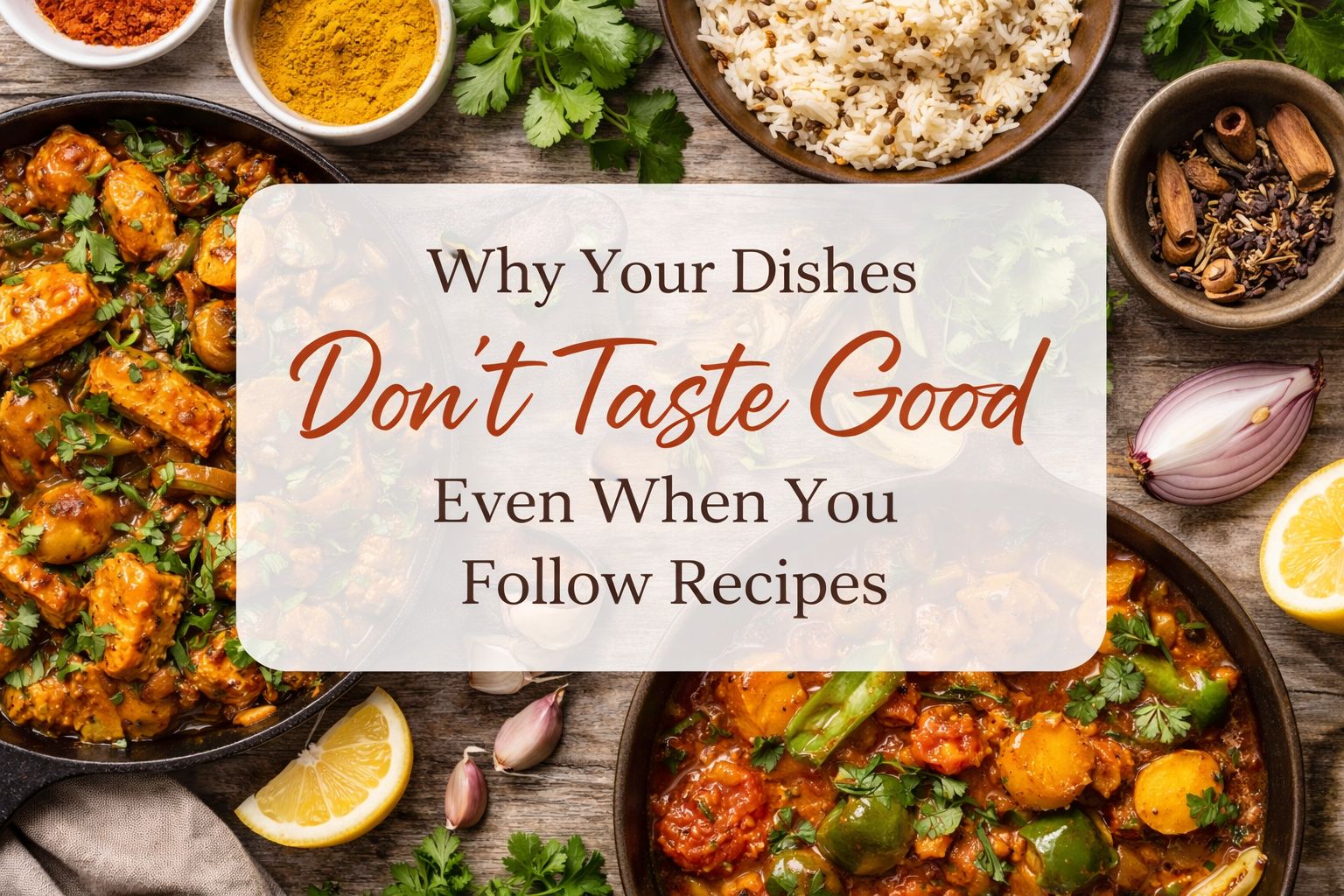
This is a very common frustration in Indian home cooking, where dishes don’t taste good even when you follow recipes — and it’s not because you’re bad at cooking.
The truth is, good cooking is more than just following recipes.
Especially in Indian kitchens, taste depends on many small details that recipes often don’t fully explain.
1. Every Indian Kitchen Is Different
Most Indian recipes are written assuming a certain level of instinct — something our mothers and grandmothers developed over years. The type of stove, pan, oil, spices, and even water varies from home to home. A recipe written for one setup may taste very different in yours, even if everything looks correct.
2. Measurements Aren’t Always Exact
Indian cooking rarely works well with strict measurements. One teaspoon of garam masala from one brand can be much stronger or milder than another. When recipes say “salt to taste” or “cook until done,” they rely on experience — not exact instructions. Without knowing how to adjust, the balance of flavors can go wrong.
3. Cooking on the Wrong Heat
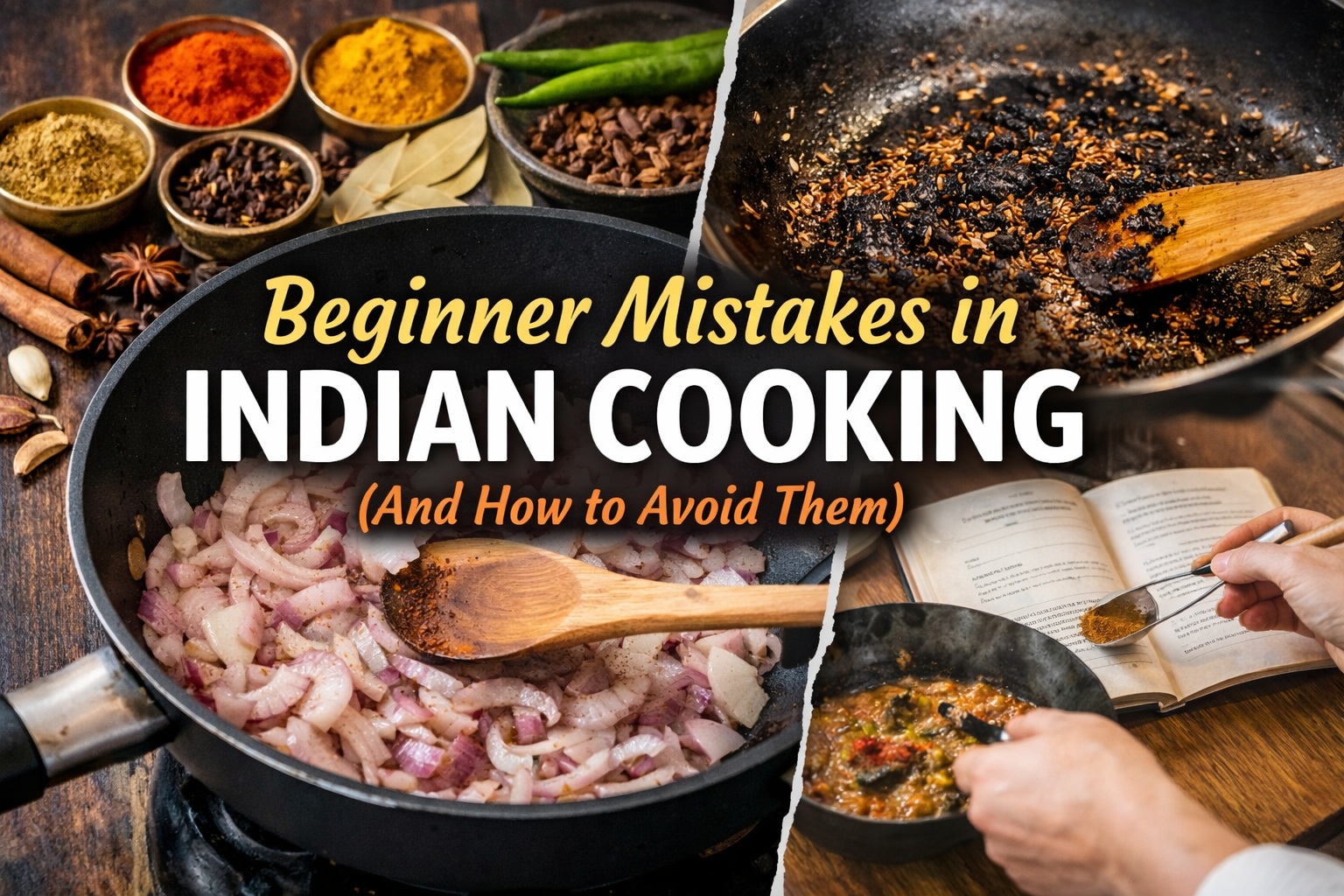
This is one of the biggest reasons food doesn’t taste right. Many beginners cook on high heat to save time or low heat to avoid burning, without understanding when each is needed. For example, spices need enough heat to release aroma but not so much that they burn. Onion color, oil separation, and simmering time all depend on proper heat control.
4. Rushing the Process
Indian food often needs patience. Onions need time to brown properly, masalas need time to cook out raw flavors, and gravies need time to come together. When steps are rushed, the dish may look fine but taste flat or raw.
5. Not Tasting and Adjusting
Recipes don’t taste your food — you do. Many people taste only at the end, when it’s too late to fix balance. Adjusting salt, spice, sourness, or richness gradually while cooking makes a huge difference.
6. Missing Technique, Not Ingredients
Often the issue isn’t what you used, but how you used it. When to add spices, how long to cook them, when to add water, and how to finish a dish are techniques that are hard to learn from written recipes alone.
Final Thought
if your dishes don’t taste good even when you follow recipes , don’t blame yourself. Cooking is a skill that grows with guidance, practice, and understanding — not just instructions. Once you learn the “why” behind the steps, your food naturally starts tasting better.
That’s where personal, one-on-one cooking guidance can truly help — by teaching you how to cook, not just what to cook.